





How to Know When It’s Time for a Tire Alignment on Your Dodge Truck
Your Dodge truck handles everything you throw at it: hauling equipment across Warren County, navigating construction zones on Scottsville Road, towing trailers to the lake, and making the daily commute through Bowling Green. But there’s one maintenance item that many truck owners overlook until it becomes a problem: wheel alignment.
Proper alignment might seem like a minor detail compared to oil changes or brake service, but it affects nearly every aspect of how your truck drives. Alignment determines whether your tires wear evenly, whether your truck tracks straight down the highway, and even impacts fuel economy. More importantly, misalignment can create safety issues, particularly in emergency maneuvers or poor weather conditions.
The challenge is that alignment problems often develop gradually. Your truck doesn’t suddenly pull hard to one side overnight. Instead, you adapt to small changes without realizing it. You compensate for drift by holding the steering wheel slightly off-center. You don’t notice uneven tire wear until it’s severe. By the time the problem becomes obvious, you might already be facing premature tire replacement.
Understanding what causes misalignment, recognizing the warning signs, and knowing when your Dodge truck needs alignment service helps you avoid unnecessary tire expenses and keeps your truck handling the way it should.
What Wheel Alignment Actually Means
Before diving into symptoms and causes, it’s helpful to understand what alignment involves. Despite the name “wheel alignment,” technicians aren’t actually adjusting your wheels. They’re adjusting the angles of your suspension components to ensure your wheels point in the correct direction and maintain proper contact with the road.
Three primary angles matter for truck alignment:
Camber refers to the inward or outward tilt of the tire when viewed from the front of the vehicle. If the top of the tire leans outward, that’s positive camber. If it leans inward, that’s negative camber. Proper camber ensures the tire’s full tread width contacts the road surface. Incorrect camber causes wear on one edge of the tire.
Caster is the angle of the steering pivot when viewed from the side of the vehicle. It affects steering stability and return-to-center feel. Positive caster means the steering axis tilts toward the driver. Trucks typically run more positive caster than cars because it improves straight-line stability, especially important when towing or hauling.
Toe describes whether the front edges of the tires point toward each other (toe-in) or away from each other (toe-out) when viewed from above. Even small toe misalignment causes rapid tire wear because the tires are essentially scrubbing sideways as they roll forward.
Dodge trucks use sophisticated suspension designs that distribute load effectively for hauling and towing. But this complexity means alignment specifications are critical. Being off by even a degree or two can cause noticeable problems.
Warning Signs Your Dodge Truck Needs Alignment
Your truck communicates alignment problems through several distinct symptoms. Learning to recognize these signs early prevents accelerated tire wear and handling issues.
Vehicle Pulls to One Side
The most common alignment symptom is pulling. When driving on a straight, flat road, your truck should track straight with minimal steering input. If you need to hold the steering wheel off-center to maintain straight travel, or if the truck drifts to one side when you momentarily release the wheel, alignment is likely off.
Some pulling can also result from tire pressure differences, uneven tire wear, or brake problems. But if tire pressures are correct and the pulling is consistent, alignment is the probable cause. The pull typically worsens at highway speeds and may become more pronounced after hitting a pothole or curb.
Steering Wheel is Off-Center
When driving straight, your steering wheel should be centered with the vehicle emblem or horn pad perfectly level. If you’re driving straight but the wheel is rotated 10, 20, or more degrees to one side, your alignment is off.
This often happens when one adjustment is incorrect relative to the others. The truck might track relatively straight because the errors partially cancel each other out, but the steering wheel position reveals the underlying problem. Beyond being annoying, an off-center steering wheel can confuse you in emergency situations when you need to react quickly.
Uneven Tire Wear
Misalignment shows up clearly in tire wear patterns. Inspect your tires regularly, looking for these specific patterns:
Wear on the inside or outside edge of the tire indicates camber misalignment. If the inside edge is worn significantly more than the outside, you have excessive negative camber. Outside edge wear suggests excessive positive camber.
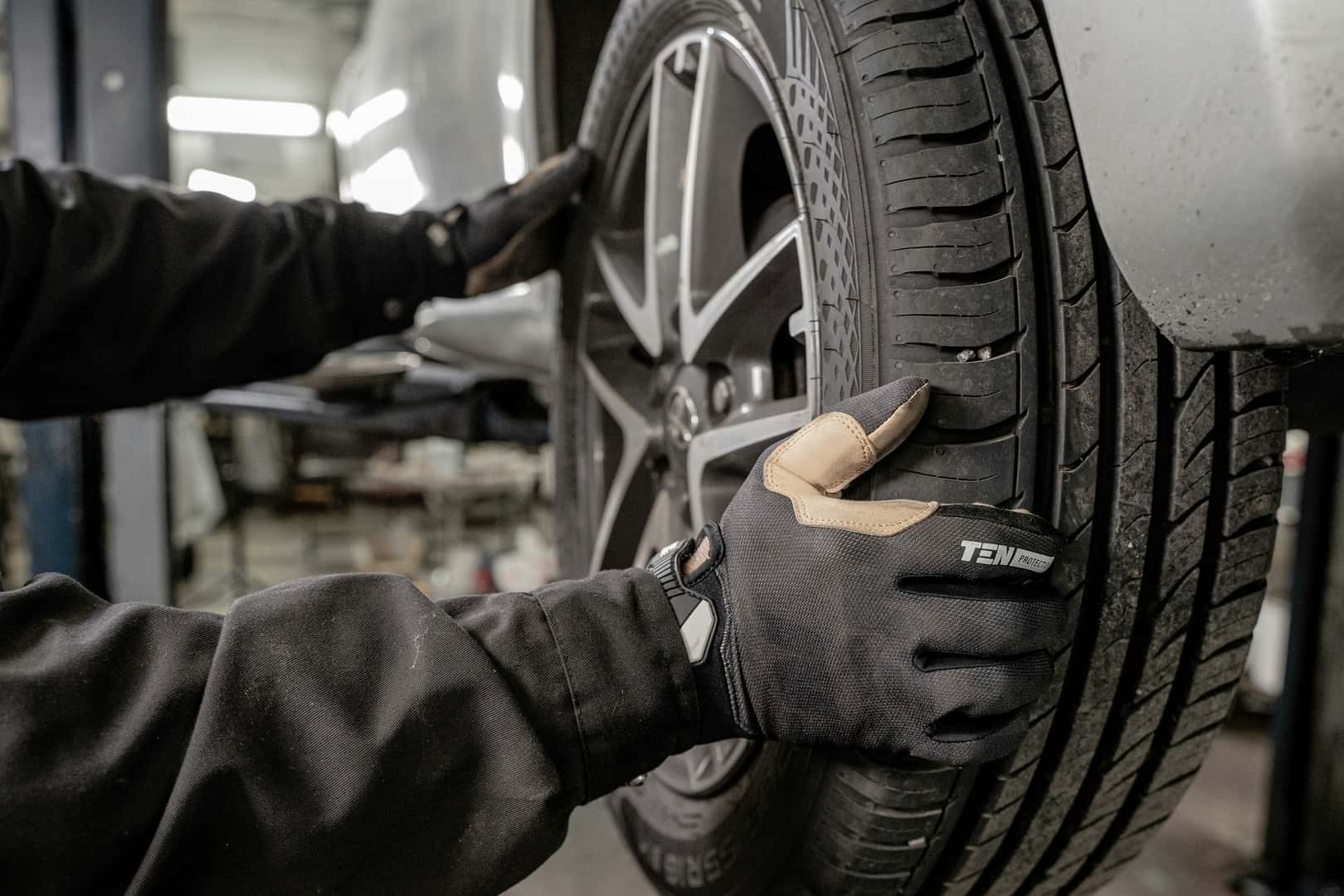
Feathering, where the tread ribs are worn more on one side than the other, indicates toe misalignment. Run your hand across the tread blocks. If they feel smooth in one direction but sharp or jagged in the other, that’s feathering from toe problems.
These wear patterns cost you money twice: first in premature tire replacement, and again in reduced fuel economy as misaligned tires create rolling resistance. A set of truck tires can cost $800-1,200 or more. Protecting that investment with proper alignment makes financial sense.
Steering Feels Loose or Vague
Proper alignment contributes to steering feel. If your Dodge truck’s steering feels less responsive than usual, or if there’s excessive play before the truck responds to steering input, alignment could be a factor. While worn steering components can also cause these symptoms, alignment affects how precisely the front wheels follow steering commands.
Vibration in the Steering Wheel
While vibration often relates to tire balance rather than alignment, severe misalignment can cause vibration, particularly at highway speeds. This happens because misaligned tires fight each other, creating oscillations that you feel through the steering wheel. If vibration began after hitting a significant pothole or curb impact, alignment is likely involved.
How Kentucky Roads Affect Your Truck’s Alignment
Bowling Green’s roads and driving conditions create specific challenges that increase alignment-related wear. Understanding these local factors helps you recognize when your truck needs service.
Pothole Season and Road Damage 🕳️
Kentucky experiences dramatic weather swings, particularly during late winter and early spring. Freeze-thaw cycles wreak havoc on road surfaces. Water seeps into pavement cracks, freezes and expands, then thaws and contracts. This process creates potholes, some appearing seemingly overnight after temperature fluctuations.
Hitting a pothole at speed delivers a tremendous impact to your suspension. The sudden shock can bend suspension components, knock alignment out of specification, or damage wheel rims. Even if the impact seems minor at the time, it might have shifted alignment enough to cause tire wear.
Scottsville Road, Campbell Lane, and other major Bowling Green thoroughfares see heavy traffic and require frequent maintenance. Construction zones often mean rough temporary surfaces or sudden transitions that jar your suspension. If you’ve recently hit a significant pothole or rough patch and notice any alignment symptoms, inspection is warranted.
Rural Roads and Gravel
Warren County’s rural roads present different challenges. Gravel roads, farm lanes, and unpaved surfaces create constant small impacts that gradually affect alignment. If you regularly travel these roads for work or recreation, your truck experiences more suspension stress than one used primarily on highways.
Uneven surfaces also mean hitting road edges, driveway entrances, and other obstacles that can impact alignment. The cumulative effect of many small impacts over time can be just as damaging as one significant pothole.
Heavy Loads and Towing
Dodge trucks are built to work, and that means hauling and towing. But heavy loads stress suspension components. When your truck bed is loaded with equipment, materials, or cargo, the additional weight compresses the suspension, changing suspension geometry and putting stress on components.
Towing creates even more complex forces. A trailer’s tongue weight loads the rear suspension while forward motion creates drag that the entire drivetrain must overcome. Uneven load distribution or swaying trailers create lateral forces that stress suspension components and can gradually affect alignment.
If you regularly haul near your truck’s payload capacity or tow trailers, more frequent alignment checks are wise. The stress on suspension components is significantly higher than for trucks used primarily for commuting.
Weather Extremes
Kentucky summers bring heat and humidity, while winters can deliver ice, snow, and freezing temperatures. These extremes affect suspension components. Rubber bushings in control arms and other suspension parts become brittle in cold weather and soft in heat, potentially allowing more movement than they should.
Hitting ice ridges or frozen road surfaces creates similar impacts to potholes but might happen more frequently during winter. Four-wheel-drive systems, engaged for traction in snow or mud, place additional stress on front suspension and steering components.
Common Causes of Alignment Problems
Understanding what causes misalignment helps you anticipate when your truck might need service and potentially avoid some causes altogether.
Road Impacts
The most common cause of sudden alignment changes is impact damage. Hitting potholes, curbs, or road debris can instantly knock alignment out of specification. The severity depends on impact speed, angle, and which wheel takes the hit. Sometimes you’ll know immediately that something is wrong. Other times, the change is subtle enough that you don’t notice for weeks or months.
Suspension Component Wear
As your truck accumulates miles, suspension components wear. Ball joints develop play. Control arm bushings deteriorate. Tie rod ends wear in their sockets. This wear allows more movement in the suspension, gradually changing alignment angles.
Unlike sudden impact damage, wear-related alignment drift happens slowly. You adapt to the changes without realizing it. This is why periodic alignment checks are important even if you haven’t noticed obvious symptoms.
Lift Kits and Modifications
Many truck owners install lift kits for appearance or off-road capability. While quality lift kits are engineered to maintain proper suspension geometry, they fundamentally change how the suspension operates. After installing a lift kit, alignment is essential to ensure proper tire wear and handling.
Some lift kits require adjustable control arms or other components to allow proper alignment at the new ride height. Skipping these components means your truck might not be alignable to factory specifications, guaranteeing premature tire wear and handling compromises.
Overloading
Exceeding your truck’s payload capacity creates excessive stress on suspension components. While modern trucks are robust, repeatedly overloading causes accelerated wear that can affect alignment over time. Always stay within your truck’s rated capacity for payload and towing.
Previous Accidents
Even minor accidents that don’t seem serious can affect alignment. A small parking lot collision or backing into a post might not cause visible damage but could have shifted suspension components enough to affect alignment. After any accident, alignment inspection is prudent even if no obvious damage exists.
What Happens During an Alignment Service
Professional alignment service involves sophisticated equipment and trained technicians who understand truck suspension geometry. Here’s what the process entails:
Initial Inspection
Before making adjustments, technicians inspect suspension and steering components. They check for worn ball joints, tie rod ends with excessive play, damaged control arm bushings, and other issues that would prevent proper alignment or cause rapid re-misalignment.
If significant wear exists, those components should be replaced before alignment. Adjusting alignment on worn parts is pointless because the worn components will continue allowing misalignment.
Tire Pressure Check
Proper tire pressure is essential for accurate alignment measurements. Technicians set all tires to the recommended pressure before beginning. Underinflated or overinflated tires affect ride height and suspension geometry, leading to incorrect measurements.
Mounting to Alignment Rack
The truck is driven onto a specialized alignment rack equipped with sensors that attach to each wheel. These sensors use cameras, lasers, or other technology to precisely measure the angles of each wheel relative to the vehicle and to each other.
Modern alignment systems are incredibly accurate, measuring angles to within hundredths of a degree. The system accounts for vehicle weight distribution, ride height, and manufacturer specifications for your specific truck model and year.
Taking Measurements
With sensors attached, the system measures current alignment angles for all wheels. The technician drives the truck slightly forward and back to settle the suspension, then takes baseline readings.
The alignment system compares current measurements to manufacturer specifications, showing which angles are out of range and by how much. This data guides the adjustment process.
Making Adjustments
Using specialized tools, technicians adjust alignment angles to bring them within specification. Toe is typically adjusted at the tie rods. Camber and caster may be adjusted at control arms, strut mounts, or using adjustment cams, depending on your truck’s suspension design.
The process is iterative. Adjusting one angle can slightly affect others, so technicians work methodically to bring all measurements into proper range simultaneously. They recheck measurements after each adjustment to verify results.
Final Measurements and Test Drive
Once all angles are within specification, technicians take final measurements to document the completed work. Many shops provide printouts showing before and after measurements so you can see exactly what was adjusted.
A short test drive verifies the truck tracks straight and the steering wheel is centered. This real-world check confirms the computerized measurements translate to proper road behavior.
How Often Should Your Dodge Truck Get Aligned
Alignment isn’t time-based maintenance like oil changes. Your truck doesn’t automatically need alignment every year or every certain number of miles. Instead, alignment should be checked and adjusted based on symptoms or after events likely to cause misalignment.
That said, having alignment checked periodically is wise, perhaps annually or every 15,000-20,000 miles. The inspection is typically quick and inexpensive or sometimes free as part of other services. If everything is in specification, great. If not, you’ve caught developing problems before they cause expensive tire wear.
Definitely have alignment checked after:
- Hitting significant potholes or road hazards
- Any accident, even minor ones
- Installing new tires (to ensure they wear evenly)
- Replacing suspension components (new parts may shift alignment)
- Installing lift kits or other suspension modifications
- Noticing any of the symptoms described earlier
For trucks used heavily for work, towing, or off-road driving, more frequent checks are justified. The additional stress on suspension components means alignment can drift faster than for trucks used primarily for commuting.
The Cost of Ignoring Alignment
Delaying alignment service when your truck needs it costs money in several ways. The most obvious is premature tire wear. Tires are expensive, and misalignment can cut their lifespan in half or more. If your tires should last 50,000 miles but misalignment causes them to wear out at 25,000 miles, you’re replacing them twice as often.
Misalignment also reduces fuel economy. When tires don’t roll straight, they create additional rolling resistance. Your engine must work harder to overcome this resistance, consuming more fuel. The effect isn’t dramatic, perhaps reducing economy by 5-10%, but it adds up over thousands of miles.
Handling and safety suffer too. A truck that doesn’t track straight is harder to control, particularly in emergency situations. If you need to swerve suddenly to avoid an obstacle, misalignment affects your truck’s response. In wet or icy conditions, the impact on handling becomes even more pronounced.
Finally, misalignment creates stress on other components. Worn suspension parts might last longer if alignment were correct. Steering components experience more stress when fighting misalignment. The cascading effects mean one relatively inexpensive maintenance item, when neglected, can lead to multiple expensive repairs.
Local Expert Perspective
“I see trucks come in all the time where the owner has been driving around with the steering wheel crooked for months, just living with it,” says Derek Martinez, senior technician at the Scottsville Road location. “They’ve adapted to it so gradually they don’t even realize how bad it’s gotten. Then we put it on the alignment rack and the toe is a full degree out of spec. Their inside tire edges are destroyed. For the cost of an alignment, they could have saved a $1,000 set of tires.”
He continues, “The other thing I tell customers is don’t ignore that pothole you hit on the way to work. If the impact was hard enough that you thought ‘wow, that was rough,’ it was hard enough to potentially knock your alignment off. A quick check takes 20 minutes and could save you hundreds down the road. Prevention is always cheaper than replacement.”
DIY vs. Professional Alignment
Some truck owners wonder if alignment is something they can handle themselves. The short answer is no, not effectively. While you can measure some alignment angles using simple tools, accurately adjusting alignment requires specialized equipment.
Modern alignment racks cost tens of thousands of dollars and use sophisticated sensors and software to achieve the precision needed for proper alignment. Without this equipment, you’re guessing. You might get it close, but “close” isn’t good enough when we’re talking about angles measured in hundredths of degrees.
What you can do yourself is monitor for symptoms and inspect tire wear regularly. Walk around your truck periodically and look at your tires. Run your hand across the tread blocks checking for uneven wear. Pay attention to how the truck drives. These observations help you catch problems early, but the actual alignment adjustment requires professional equipment and expertise.
Protecting Your Tire Investment
Tires are one of the most expensive maintenance items for truck owners. A set of quality truck tires easily exceeds $1,000, and for larger trucks or specialty tires, the cost can be much higher. Proper alignment is one of the simplest ways to protect that investment.
Combined with proper tire rotation and maintaining correct inflation pressure, good alignment can help your tires reach their full service life. This means 50,000, 60,000, or even 70,000+ miles depending on tire quality and driving conditions.
Beyond the financial argument, proper alignment means better handling, improved fuel economy, and safer operation. Your truck is designed to perform at its best with proper alignment. Operating with misalignment means you’re not getting the driving experience your truck should provide.
The Connection Between Alignment and Other Services
Alignment doesn’t exist in isolation. It connects to other maintenance and repair services in important ways.
When replacing tires, alignment should be checked to ensure the new tires wear evenly from day one. There’s nothing more frustrating than installing new tires only to discover months later that misalignment has already caused uneven wear.
When replacing suspension components, alignment adjustment is typically necessary. New parts may have slightly different dimensions than worn parts, shifting alignment angles. Plus, the installation process itself, which involves disconnecting components and taking weight off the suspension, can affect alignment.
If you’re experiencing steering problems or unusual handling, alignment should be part of the diagnostic process. While the issue might be worn steering components or tire problems, alignment could be a contributing factor or even the primary cause.
Making Alignment Part of Your Maintenance Routine
The best approach to alignment is proactive awareness. You don’t need to schedule alignment service arbitrarily, but you should stay alert to symptoms and have alignment checked after events likely to cause problems.
Make tire inspection part of your routine. When you wash your truck or check tire pressure, take a moment to look at tread wear. This takes 30 seconds but can catch developing problems early.
Keep a log of significant impacts. If you hit a pothole hard enough to jar the truck, make a note. If you notice symptoms developing after that event, you’ll know when the problem likely started.
When you take your truck in for other services, ask technicians to do a quick visual check of suspension components and tire wear. They can often spot developing issues during routine service visits, catching problems before they become serious.
Your Truck Deserves Proper Alignment ✅
Wheel alignment might seem like a minor detail, but it affects tire life, fuel economy, handling, and safety. The warning signs are usually clear if you know what to watch for: pulling to one side, off-center steering wheel, uneven tire wear, or changes in steering feel.
Kentucky’s challenging roads, from pothole-prone urban streets to rough rural lanes, make alignment issues more common than in areas with better road conditions. Add in the stress from hauling and towing, and your Dodge truck’s alignment faces constant challenges.
The good news is alignment service is straightforward, relatively affordable, and provides immediate benefits. Proper alignment helps your tires last longer, improves how your truck drives, and gives you confidence that your truck is operating as designed.
Get Your Alignment Checked Today 🔧
Don’t wait for tire wear to become severe or for handling problems to worsen. If your Dodge truck is showing any signs of misalignment, or if it’s been a while since your last alignment check, professional service ensures everything is within specification.
Experienced technicians have the equipment and expertise to accurately measure and adjust alignment on all Dodge truck models. Whether you drive a Ram 1500, 2500, or classic Dakota, proper alignment keeps your truck handling right and your tires wearing evenly.
Schedule an alignment check or service today at 2209 Scottsville Rd in Bowling Green, or call to discuss any symptoms or concerns with a service advisor. Protecting your tire investment and ensuring optimal handling starts with proper alignment. Because your truck works hard for you, and it deserves to be maintained right.

0 comment(s) so far on How to Know When It’s Time for a Tire Alignment on Your Dodge Truck