




Jeep Grand Cherokee AWD System Check Before Spring Adventures
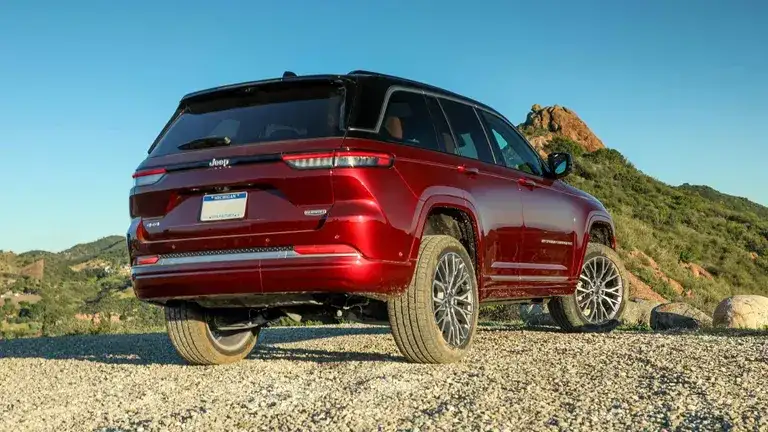
Last month, a 2021 Jeep Grand Cherokee came into our service bay after its owner returned from a weekend trip to Mammoth Cave National Park. He had taken the vehicle off the main path on a muddy trail and noticed the AWD system felt sluggish, like it wasn’t distributing power the way it should. He had ignored a Transfer Case Service Due message for nearly eight months and hadn’t had the front differential fluid checked since purchase. After 41,000 miles of Bowling Green commutes and two off-road trips, the transfer case had been running on degraded fluid that had lost its viscosity protection. The transfer case rebuild ran $2,100. The fluid service he skipped? It would have cost $180.
Spring in south-central Kentucky means something specific if you own a Grand Cherokee. It means muddy trails near Barren River Lake, waterlogged backroads through Warren County, and the kind of unpredictable weather that can turn a dry fire road into a slick obstacle course in under an hour. Your Grand Cherokee’s AWD system was built for exactly these conditions, but only if the components underneath are properly maintained.
Here’s what most Grand Cherokee owners get wrong: they assume that because the vehicle handles daily driving around Scottsville Road and the US-231 corridor without complaint, the AWD system must be in good shape. Light daily driving rarely stresses a transfer case or front differential enough to reveal a problem. It’s the moment you ask for real traction, on a muddy boat ramp at Barren River State Resort Park or a spring trail outside Glasgow, that a neglected drivetrain lets you down.
This guide walks through what your Jeep Grand Cherokee’s AWD system actually needs before spring adventures, what Kentucky driving conditions specifically demand from your drivetrain, and what it costs when maintenance gets skipped at the wrong time.
How the Grand Cherokee AWD System Actually Works
More Than Just Four Spinning Wheels
The Grand Cherokee doesn’t use a single AWD system. Depending on your trim and model year, you may have Quadra-Trac I, Quadra-Trac II, or Quadra-Drive II, each with different service requirements but a shared dependency on clean, properly viscous fluids to transfer torque and manage the clutch packs that control power distribution between axles.
Quadra-Trac I is a full-time single-speed system requiring no driver input. Quadra-Trac II adds a two-speed transfer case with a dedicated low range. Quadra-Drive II goes further with an electronic limited-slip rear differential that uses a multi-plate clutch pack to actively distribute torque side to side. Each additional layer of capability adds another fluid reservoir that needs periodic attention.
When you engage low range on a trail south of Bowling Green or push through standing water on a Warren County backroad after spring rains, those clutch packs and gear sets work under simultaneous load and heat. Degraded fluid can’t protect them the way fresh fluid does. Worn clutch packs slip rather than grip, which is exactly the opposite of what you need when traction matters most.
Why Kentucky Winters Set Up Spring Failures
Bowling Green winters are mild compared to states further north, but freeze-thaw cycles on roads like KY-234 and US-68 create real stress for drivetrain seals and venting systems. When temperatures swing from the mid-20s overnight to the low 50s by afternoon, drivetrain components expand and contract repeatedly. This cycling accelerates seal wear and allows moisture to infiltrate differential and transfer case fluid over time.
The result is that by the time spring trail season arrives, your AWD system may be operating on fluid that looks acceptable on the dipstick but has lost its protective additives and picked up enough moisture to promote internal corrosion. That’s not a theoretical problem. It’s what we find regularly in the service department at our Scottsville Rd location when owners come in after a trail incident.
Warning Signs Your Grand Cherokee AWD System Needs Attention
Catching drivetrain problems before a trail trip is always better than discovering them on a remote backroad outside Munfordville with no cell signal. Here are the signs worth paying attention to as spring approaches.
- Grinding or clicking during turns: This often points to a front differential or CV axle issue and gets significantly worse under load on uneven terrain.
- Shudder when engaging 4WD or AWD modes: A transfer case with worn clutch packs or low fluid will shudder or hesitate when the system tries to distribute torque.
- Vibration at highway speeds that wasn’t there before: Driveshaft, CV joint, or differential wear can all present this way and worsen quickly under off-road stress.
- Transfer case warning light or 4WD system error message: Never ignore these. Even if the vehicle drives fine on pavement, a flagged AWD system can fail completely when you actually need it.
- Fluid puddles under the center or rear of the vehicle: Transfer case and differential leaks often go unnoticed until fluid levels drop to the point of causing damage.
- Sluggish or delayed engagement when switching drive modes: A healthy system responds immediately. Hesitation means something in the transfer case or electronic controls needs attention.
- Unusual whining noise from beneath the vehicle: Differential bearing wear presents as a tone that changes with vehicle speed and is easy to dismiss as road noise until it becomes a much louder problem.
If you notice any of these signs before a planned trip to Mammoth Cave, Barren River Lake, or anywhere off the main roads in Warren County, bring your Grand Cherokee in before you go, not after something breaks on the trail.
The Complete AWD Spring Service Checklist
Transfer Case Fluid Service
The transfer case is the heart of your Grand Cherokee’s AWD system, and its fluid is the single most important maintenance item most owners skip. Jeep recommends transfer case fluid service every 30,000 to 60,000 miles depending on use, but that interval assumes normal operation. If you use your Grand Cherokee for any off-road driving, towing, or regularly operate in 4WD Low, you’re on the severe service schedule, which means more frequent attention.
Degraded transfer case fluid loses viscosity and film strength, meaning the metal-to-metal contact inside the case isn’t properly cushioned. The result is accelerated wear on internal gears and chain components that eventually requires a full rebuild. Fresh fluid costs $180 to $220 for the service. A transfer case rebuild runs $1,800 to $2,400. The math isn’t complicated.
Front and Rear Differential Fluid
Your Grand Cherokee has separate fluid reservoirs for the front and rear differentials, and both need inspection before spring adventures. Differential fluid breaks down from heat and contamination just like engine oil, but most owners never think about it because it doesn’t have a visible dipstick or a dashboard reminder.
A differential fluid service on both axles runs $150 to $220 total and should include a visual inspection of the differential covers for any signs of impact damage from previous off-road use. A dented differential cover from an underbody strike can compromise the seal and allow fluid to leak out gradually, something you’d never notice during Bowling Green commutes but would feel immediately on a rocky trail.
CV Axles and Driveshaft Inspection
The CV axles on your Grand Cherokee transfer power from the differentials to the wheels through a range of suspension travel and steering angles. The rubber boots that protect the CV joints from dirt and moisture are vulnerable to damage from trail debris, curb strikes, and general use. A torn boot allows grease to escape and contaminants to enter, and a contaminated CV joint fails quickly under the stress of off-road use.
A visual inspection of all four CV axle boots takes minutes and can prevent a $350 to $600 CV axle replacement from becoming an emergency. Driveshaft U-joints should also be checked for play and lubricated if equipped with grease fittings, as dry U-joints develop vibration and eventually fail at the worst possible moment.
Skid Plate and Underbody Inspection
If your Grand Cherokee has been on any trails or gravel roads through Warren County or the surrounding area, a spring underbody inspection is worth scheduling before your next adventure. Skid plates protect the transfer case, fuel tank, and other underbody components, but they can suffer dents and displacement from rock strikes that reduce their protective coverage.
Loose or displaced skid plates can also create noise and vibration that’s easy to misdiagnose as a drivetrain issue. A quick inspection confirms everything is properly secured and positioned before you need that protection on a real trail.
What Skipping AWD Maintenance Actually Costs
Here’s a side-by-side comparison based on what we see regularly at our service department on Scottsville Rd.
Skipping transfer case and differential fluid service:
- Transfer case rebuild after fluid failure: $1,800-2,400
- Front differential rebuild if also neglected: $800-1,200
- Tow from remote trail location: $250-500
- Total reactive cost: $2,850-4,100
Proactive spring AWD service:
- Transfer case fluid service: $180-220
- Front and rear differential fluid service: $150-220
- CV axle boot inspection: Included in service visit
- Smart total: $330-440
Your savings from proactive AWD maintenance: $2,500-3,660 on this scenario alone.
A Grand Cherokee owner from the Bowling Green area came to us last April after his AWD system began shuddering violently on a trail near Green River Lake. He had purchased the vehicle used at 28,000 miles and assumed the previous owner had kept up with drivetrain services. When we drained the transfer case, the fluid was black and metallic, well past any reasonable service interval. The transfer case required a rebuild at $2,050. A fluid service at the time of purchase would have been $195.
Why Bowling Green-Area Driving Demands Drivetrain Attention
Warren County sits at an interesting crossroads for Grand Cherokee owners. Daily driving around Bowling Green is relatively mild, with flat terrain and paved roads that put minimal stress on AWD components. But within 30 to 45 minutes in any direction, the terrain changes dramatically. Barren River Lake to the south, Mammoth Cave to the north, the Green River corridor to the east, and the backroads through Edmonson and Hart counties all offer the kind of conditions that expose any weakness in a drivetrain quickly.
Kentucky’s spring weather adds another variable. The region averages 4 to 5 inches of rainfall in March and April, and that precipitation falls on terrain ranging from clay-heavy soil that becomes extremely slick when wet to limestone gravel roads that develop deep ruts after heavy rain. Your Grand Cherokee’s AWD system may be asked to manage wheel spin, distribute torque across axles, and maintain traction on surfaces that change character completely between dry and wet conditions.
The drivers who end up stranded aren’t always the ones who push their vehicles hardest. Often, it’s the owner who kept the Grand Cherokee in perfect cosmetic condition, used it primarily for Bowling Green errands, and then took it on one spring trail weekend without ever considering that the drivetrain hadn’t been serviced since the previous owner.
“We see it every spring without fail,” says Derek Calloway, Lead 4×4 Technician at the Scottsville Rd location. “Someone brings in a Grand Cherokee that’s been driven conservatively for two or three years and then suddenly asks the AWD system to actually work on a trail. The transfer case fluid is three years old, the differential fluid has never been changed, and they’re surprised when something fails. These systems are incredibly capable when they’re properly maintained. Skipping fluid services is like expecting your engine to run fine on three-year-old oil. It won’t.”
Heading into spring trail season with a properly serviced AWD system isn’t just about protecting your investment. It’s about making sure your Grand Cherokee actually delivers the capability you bought it for when the terrain gets serious. The certified Jeep technicians at Martin Dodge Jeep Chrysler Ram have the training and equipment to service every variant of the Grand Cherokee’s drivetrain correctly, using the specific fluids each system requires.
Your 30-Day AWD Spring Check
This week: Check your maintenance records for the last transfer case and differential fluid service. If you can’t find a record of it, or if it’s been more than 30,000 miles since the last service, that’s your first action item. You can also do a quick visual inspection under the vehicle when it’s parked overnight. Any fluid spots on the ground beneath the center or rear of the vehicle indicate a leak that needs attention before a trail trip.
Within two weeks: Pay attention to how your AWD system behaves during normal Bowling Green driving. Switch between 2WD, Auto, and 4WD modes on a quiet section of road and listen for any hesitation, shudder, or grinding during the transition. Drive through a slow, tight turn in a parking lot with the system in 4WD High and feel for any binding or clicking. These are conditions that reveal developing problems that straight-line highway driving won’t expose.
By month’s end: Schedule your AWD spring service appointment and ask specifically for transfer case fluid service, front and rear differential fluid inspection, CV axle boot check, and a full underbody inspection if you’ve been on any gravel or dirt roads recently. Bring your purchase records if you bought the vehicle used, so the technician can determine what services may never have been performed.
These three steps take less than an hour of your time combined but can prevent the kind of trail breakdown that turns a weekend adventure into an expensive recovery operation.
Schedule Your AWD Service Today
That Grand Cherokee owner who came in after his Mammoth Cave trail trip with a destroyed transfer case? He’s back on the trails now, but he schedules a full drivetrain inspection every spring before his first trip of the season. He told us the $2,100 rebuild was the most expensive lesson he’s learned as a vehicle owner, and that the $180 fluid service he now does annually feels like the best money he spends on the Jeep all year.
The takeaway is straightforward: your Grand Cherokee’s AWD system is only as capable as its last service. Capable hardware running on degraded fluids isn’t a capable vehicle. It’s a liability waiting to reveal itself at the worst possible moment.
The certified Jeep technicians at Martin Dodge Jeep Chrysler Ram are trained specifically on Grand Cherokee drivetrain systems and carry the correct fluids for every Quadra-Trac and Quadra-Drive variant. We service these vehicles every week and understand exactly what Kentucky trails and Warren County backroads demand from your AWD system.
Schedule your Grand Cherokee AWD service today by contacting our service department or booking online. Martin Dodge Jeep Chrysler Ram is located at 2209 Scottsville Rd, Bowling Green, KY 42104.
Proper AWD maintenance protects your investment, ensures your Grand Cherokee delivers its full off-road capability, and gives you the confidence to explore Kentucky’s best trails knowing your drivetrain is ready for whatever the terrain demands. That’s what proper service delivers.

0 comment(s) so far on Jeep Grand Cherokee AWD System Check Before Spring Adventures